47% of Salesforce Orgs Aren’t AI-Ready. Here’s What’s Actually Stopping Them.
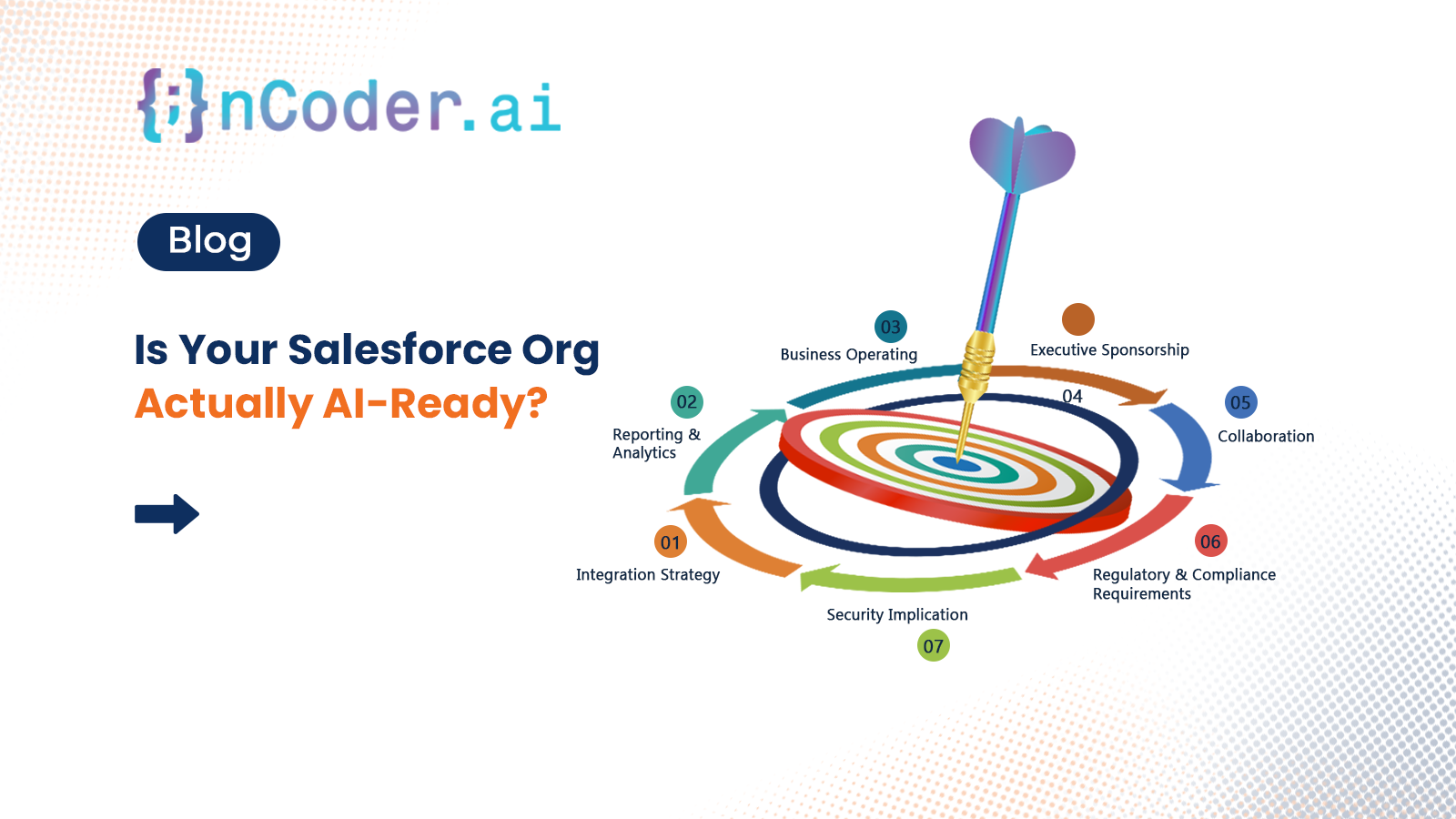
The AI tools exist. Agentforce is live. Einstein keeps getting smarter. Leadership keeps asking “when are we adopting AI?” And somewhere in the middle of all that excitement, your Salesforce developer is quietly thinking: “We can’t. Not with this org.”
Both sides are right. And the gap between them is bigger than most teams realise.
The barrier to Salesforce AI adoption isn’t budget. It isn’t willingness. It isn’t a lack of skilled people. It’s the years of decisions, quick fixes, and undocumented code sitting underneath the org that leadership is trying to add AI on top of.
You can’t build something intelligent on a foundation that doesn’t understand itself.
What’s actually blocking Salesforce AI readiness
When teams say their org isn’t AI-ready, they’re describing one of four things. And they compound each other — fixing one makes the others easier. Ignoring one makes all of them worse.
Notice something? None of these blockers are about AI tools being too complex or too expensive. Every single one is about the state of the org itself — not the AI sitting on top of it.
Agentforce and Einstein are only as intelligent as the org they operate in. A messy, undocumented, legacy-heavy Salesforce org doesn’t just slow down AI — it makes AI a liability instead of an asset.
What an AI-ready Salesforce org actually looks like
Being AI-ready for Salesforce isn’t about having the latest licences. It’s about having an org that AI can understand, navigate, and operate in safely — without creating new problems in the process.
Clean, modern architecture. Flows instead of Process Builders. Trigger frameworks instead of spaghetti Apex. Current API versions. AI agents can only work with what the platform gives them access to — and deprecated components aren’t it.
Documented business logic. Tools like Agentforce need to understand what your org does and why. Undocumented orgs are black boxes. And automating a black box is how you create incidents at scale.
Visible dependencies. When AI makes a change, it needs to know what else that affects. An org with hidden dependencies is an org where AI can cause damage nobody planned for.
The path to Salesforce AI readiness
Four steps from legacy org to AI-ready
The teams already winning with Salesforce AI
The Salesforce teams making real progress with AI aren’t the ones who bought the most licences. They’re the ones who did the unglamorous work first.
They mapped their org before they automated it. They documented before they delegated to AI. They migrated legacy components before they layered Agentforce on top. They built the foundation — and now AI is actually working for them.
The question isn’t whether to adopt AI. It’s whether your org is ready.
Every Salesforce team will adopt AI. The question is whether they do it on a foundation that makes AI an advantage — or a liability.
The teams who get there first are the ones being honest about what’s actually inside their org right now — and fixing it systematically instead of hoping AI will work around it.
When developers stop firefighting and start focusing on AI implementation, the conversation with leadership changes completely.
The answer stops being “we can’t yet.”
It becomes “we already are.”
nCoder.ai was built to help Salesforce teams close the AI readiness gap — mapping legacy orgs, automating modernization, and generating the documentation AI needs to work safely. The org becomes the foundation. AI becomes the advantage.
Where are you on the AI readiness journey? Drop a comment with your biggest blocker — I read every one.
Free Salesforce technical debt and AI readiness assessment. No commitment. Just clarity.
Get Your Free Assessment →